Residential Moves
Should I broaden my home search beyond Oklahoma City?
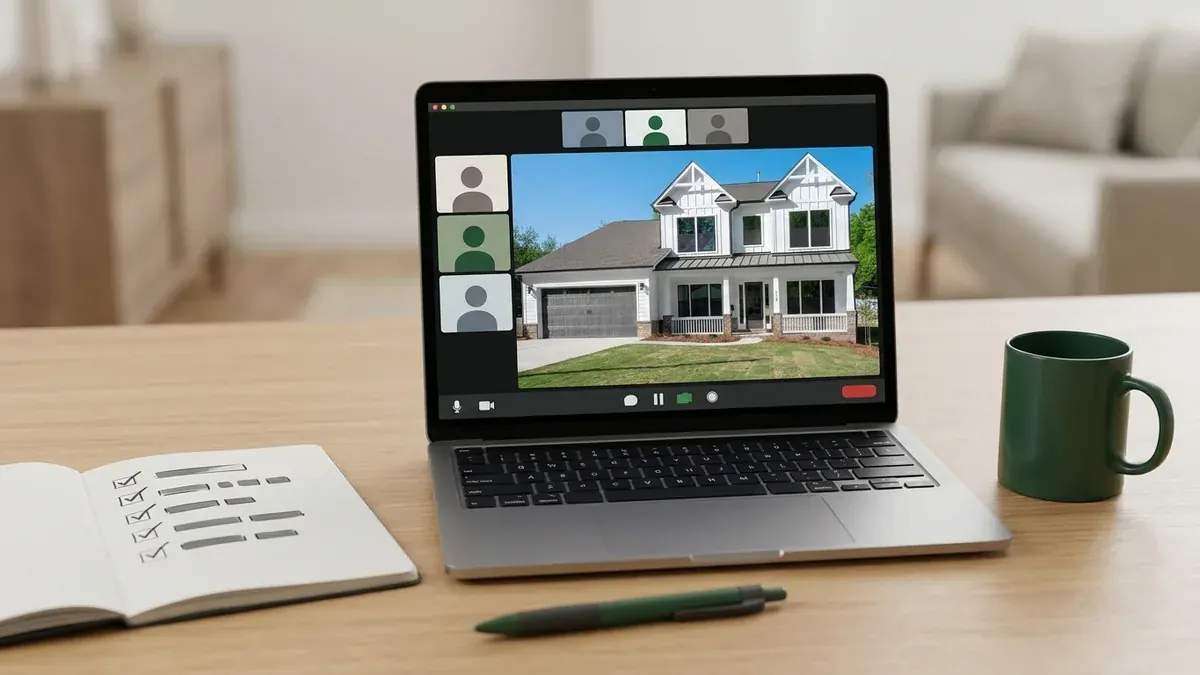
Broadening a home search beyond Oklahoma City makes sense when the change you need is not available inside the city at a price you accept. This guide covers the questions to settle first, the signs your radius is wrong, and how to test an Oklahoma City Metro community before you commit.
On this page
Start with what has to change
Broadening your home search beyond Oklahoma City makes sense when the change you need cannot be found inside the city limits at a price you are willing to pay. Before you widen the map, name the problem your current home is not solving. That problem might be space, a yard, a shorter drive to a new job, or simply a different kind of street than the one you live on now.
A search radius is a tool, not a goal, and it should change as you learn more about what you want. Some people widen it because they assume the surrounding communities are cheaper, then discover that a specific lot size or home age matters more than the town line. Others stay narrow out of habit and never see the options that would have fit their life better.
Write down two or three things the next home must do that the current one does not, and be specific about each one. Then ask which of those depend on location and which depend on the property itself, because the answer decides where you search. A bigger garage can exist in Oklahoma City or in Piedmont, but a shorter drive to a workplace in Edmond cannot be found just anywhere.
Questions to answer before you widen the map
The Oklahoma City Metro includes Oklahoma City itself plus communities such as Edmond, Piedmont, Bethany, Yukon, Moore, Norman and Nicoma Park, and each sits a different distance from the places you go every week. Before you add any of them to your search, work through the questions below with everyone who will live in the home. Treat any disagreement as useful information rather than a problem to smooth over.
- How many minutes are you willing to drive to work on a normal weekday morning?
- Which family members, friends or regular activities do you need to stay close to?
- Do you want city water and sewer, or are you open to a well and septic system?
- Would you accept an older home that needs work if it bought you more space or land?
Signs your search is too narrow or too wide
A search that is the wrong size shows itself in patterns, not in any single listing. If you see the same few homes week after week, or if every new option feels like a compromise you resent, the radius is probably too tight. If you cannot remember which town a home was in, or you have toured somewhere you would never actually live, it is probably too loose.
- You keep revisiting the same three listings because nothing new appears in your area.
- Every home in your budget needs a compromise you already know you will regret.
- You are touring homes in communities you have never driven through on a weekday.
- Your saved searches span so many towns that you cannot compare them fairly anymore.
- You have not yet decided what a longer drive is actually worth to you.
What a wider radius buys and what it costs
Widening the search usually buys choice. Surrounding communities in the Oklahoma City Metro offer different lot sizes, different home ages and different mixes of newer subdivisions and established neighborhoods, so a wider radius shows you shapes of property that a single zip code may not contain. More options also make it easier to walk away from a home that is almost right but not quite, because you know another one is coming.
The cost is time, and time is easy to underestimate when you are excited about a house. A longer drive to work is a daily cost, a longer drive to family is a weekly one, and both add up in ways a listing photo never shows. Test the drive at the hour you would actually make it, not on a quiet Sunday afternoon when the roads are empty and every town feels close.
Services change as you move outward, and they change your monthly budget along with them. Some areas run on city water and sewer, while others rely on rural water districts, wells and septic systems that carry their own maintenance and inspection questions. Confirm which utilities serve a specific address with the city or county before you fall for the house, because the answer affects both the inspection and the budget.
How to test a community before committing
Spend time in a community before you make an offer there, and do it at the times you would actually be living your life. Drive the route to work on a weekday morning, shop for groceries on a Saturday, and sit in a parking lot after dark to see how the area feels to you. Your own reaction to those ordinary moments is data worth collecting, and it is free.
Talk to people who already live where you are looking, because they know things no listing will tell you. Ask what surprised them after they moved in, what they would check before buying again, and what the drive is really like in bad weather. Then ask the city or county office about utilities, trash service and any planned road projects near the address you are considering.
I ask people to describe a normal Tuesday in the new home before we look at a single listing. If the Tuesday does not work, the house will not fix it.
How the Oklahoma City Metro fits together
Oklahoma City is large by land area, so a move within the city can already change your drive, your lot size and the age of the homes around you. Edmond sits to the north, Moore and Norman to the south, Bethany and Yukon to the west, and Piedmont to the northwest, with Nicoma Park and Choctaw to the east. Each direction changes which employers, highways and services are close at hand.
None of these communities is better than another in any general sense, and treating them that way leads to a poor decision. Each one fits a particular set of tradeoffs around distance, property type and services, and the right match for you may look wrong to a neighbor. Your job is to match the tradeoffs to the life you described in the first step, not to pick a winner for the whole metro.
Deciding how wide to go
Set the radius by working backward from your weekly routine rather than forward from a map. Mark the places you must reach, decide the longest drive you will accept to each, and let the overlap between those limits define where you look. That area might include only part of Oklahoma City, or it might stretch across several surrounding communities.
Revisit the boundary after every few showings, because what you learn on tours should change it, and it usually does. If the homes inside your radius keep missing on the same feature, widen it in the direction that fixes the problem. If the homes at the edge feel too far once you have driven them at real hours, pull it back in and accept the tradeoff.
Ernie deBernard works with buyers across the Oklahoma City Metro, with recent residential transactions in Oklahoma City, Edmond, Piedmont and Bethany, and he has spent more than 25 years in real estate. If you are trying to decide how wide your own search should be, start by describing what has to change about where you live now. From there, he can help you map that onto the communities that actually fit.
This article is general information about searching for a home in the Oklahoma City Metro, not legal, tax or financial advice. Confirm utilities, services and any current details for a specific address with the city or county office or a licensed professional.

Written by